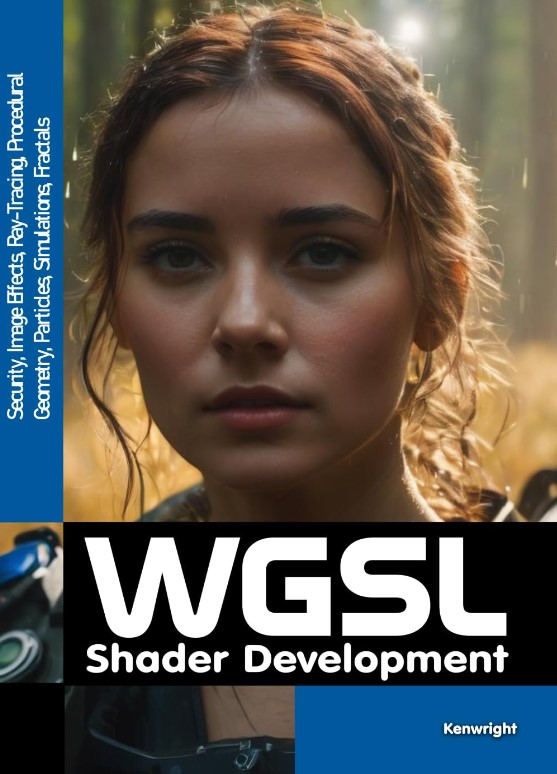
An insightful journey into webgpu, "WebGPU Shader Language Development: Vertex, Fragment, Compute Shaders for Programmers" explores its profound influence on the intelligent systems. With clarity and enthusiasm, this essential read delivers fresh perspectives and actionable insights that inspire curiosity and spark meaningful progress.
From foundational principles to advanced techniques, "WebGPU Shader Language Development: Vertex, Fragment, Compute Shaders for Programmers" delivers a well-rounded experience that caters to learners at every stage. Each page is infused with positivity and purpose, encouraging readers to think boldly and embrace new ideas with confidence. The author's passion for the subject shines through every chapter, offering readers a refreshing mix of technical rigor and creative inspiration. Embark on a transformative journey through the world of webgpu with "WebGPU Shader Language Development: Vertex, Fragment, Compute Shaders for Programmers", a masterfully written guide that blends clarity with depth. Readers will find themselves motivated by the book’s clear explanations, thoughtful examples, and forward-thinking perspective.
After 15 years in the industry, I rarely come across something this refreshing. Every page delivers insights that are both practical and forward-thinking. A must-have for professionals.
The diagrams and visuals were top-notch—clear, purposeful, and genuinely helpful in understanding the concepts.
December 31, 2025
The section on graphics sparked ideas I hadn’t considered before. It’s truly eye-opening.
Couldn't agree more. The real-world examples made all the difference for me—they brought the theory to life.
December 31, 2025
This book is more than a read—it’s a catalyst for growth. I feel energized and equipped to take action.
I felt like the author was guiding me personally. The tone was encouraging and the advice felt tailored to real challenges.
January 6, 2026I loved the mix of academic depth and practical relevance. It’s a rare balance that this book achieves beautifully.
January 9, 2026Stay updated with the latest in tech literature
The son of a Wisconsin schoolteacher, Todd Bol was well into his fifties when he dreamt up the first Little Free Library, not expecting that tens of t...
Read MoreSign up to get the Sloww Sunday newsletter via email for free:👇 Sloww Sunday Newsletter 221 (Nov 9, 2025) — Awareness, Burning Questions, Suff...
Read MoreYou’ve probably said it or heard it: “I work better under pressure.” It feels true because when the deadline looms, your brain kicks into overdr...
Read MoreEnhance your reading and learning experience
Write documentation as if the next person reading it is a violent psychopath who knows where you live.
Take brief notes after each chapter. Summarizing helps cement knowledge.
Use the Feynman Technique: teach what you learn to someone else to identify knowledge gaps.
Use a pointer or your finger to guide your eyes. This can increase reading speed by 25%.
Follow the 20-20-20 rule: every 20 minutes, look at something 20 feet away for 20 seconds.
Organize books by color for visual appeal or by genre for practical access.
Sarah Johnson
Professional ReviewerGreat point! I especially appreciated the chapter on implementation strategies—it offered clear, actionable steps I could use immediately.
January 3, 2026