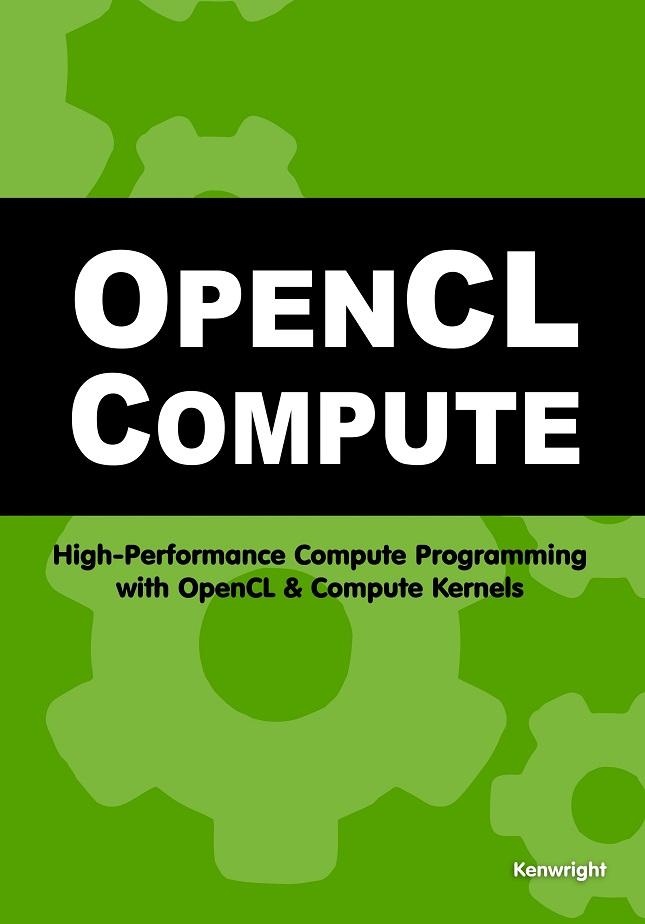
An visionary journey into OpenCL, "OpenCL Compute (Paperback)" explores its profound influence on the data-driven world. With clarity and enthusiasm, this essential read delivers fresh perspectives and actionable insights that inspire curiosity and spark meaningful progress.
From foundational principles to advanced techniques, "OpenCL Compute (Paperback)" delivers a well-rounded experience that caters to learners at every stage. Each page is infused with positivity and purpose, encouraging readers to think boldly and embrace new ideas with confidence. Embark on a transformative journey through the world of OpenCL with "OpenCL Compute (Paperback)", a masterfully written guide that blends clarity with depth.
This book doesn’t just inform—it challenges assumptions and introduces a bold, refreshing framework for thinking differently.
The section on Parallel Programming sparked ideas I hadn’t considered before. It’s truly eye-opening.
This book didn’t just inform—it inspired me to rethink how I approach Heterogeneous Computing in my own work.
August 11, 2026Couldn't agree more. The real-world examples made all the difference for me—they brought the theory to life.
August 18, 2026
The author's mastery of GPU Computing is evident throughout. Every chapter feels like a masterclass.
Great point! I especially appreciated the chapter on implementation strategies—it offered clear, actionable steps I could use immediately.
August 20, 2026I loved how the author used personal stories to illustrate key points. It added depth and authenticity to the material.
August 16, 2026Stay updated with the latest in tech literature
How surveillance technology infuses policing with even more racial bias. | Lit Hub Politics Why studying Goldilocks can help us write emotionally...
Read MoreSome people are young, just not you. The post It’s 2020 and you’re in the future appeared first on Wait But Why. ...
Read MoreThere are at least five different core questions around data centers and their politics. In what ways are specific concerns people raise about data c...
Read MoreEnhance your reading and learning experience
Organize books by color for visual appeal or by genre for practical access.
Create a dedicated reading space with good lighting and minimal distractions.
Write documentation as if the next person reading it is a violent psychopath who knows where you live.
Follow the 20-20-20 rule: every 20 minutes, look at something 20 feet away for 20 seconds.
Take brief notes after each chapter. Summarizing helps cement knowledge.
Use the Feynman Technique: teach what you learn to someone else to identify knowledge gaps.
Sarah Johnson
Professional ReviewerThis book didn’t just inform—it inspired me to rethink how I approach Heterogeneous Computing in my own work.
August 20, 2026